Siyi Xu 许偲艺

Associate Astronomer (Tenured) • Gemini Observatory • NSF NOIRLab • ISSI-Bern

Address: NOIRLab Headquarters, 950 N Cherry Ave, Tucson, AZ 85719

About

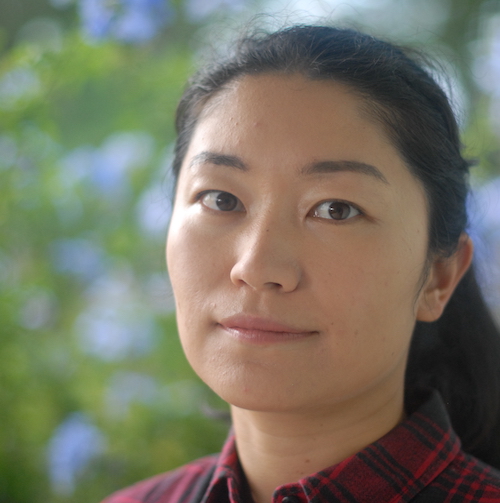
Hi! I am Siyi Xu, a tenured astronomer at the Gemini Observatory/NSF NOIRLab. I divide my time between pursuing my own research and supporting observatory operations. I use telescopes on the ground and in space to study planetary systems around white dwarfs. I also serve as an exoplanet discipline scientist at the International Space Science Institute (ISSI) Bern. I was born in Kunshan, a beautiful town on the east coast of China. When I am not looking at the stars, I enjoy all kinds of outdoor activities.

Research

The field of exoplanets -- the study of planetary systems beyond our solar system -- is one of the fastest-moving areas in astrophysics today. Astronomers have now discovered more than 6,000 extrasolar planets, and most orbit stars that will one day evolve into white dwarfs. Our own Sun will follow this path in about five billion years. What will happen to the solar system then? And more broadly, what becomes of planets, asteroids, and moons when their stars exhaust their fuel and leave the main sequence? These are the questions at the heart of my research.

I use a range of techniques to investigate the remains of planetary systems around white dwarfs. With telescopes such as TESS and ZTF — and soon LSST — I search for planets and fragments that cross in front of white dwarfs. Spectroscopic data from the Hubble Space Telescope, the Keck Telescope, the Very Large Telescope, and the Dark Energy Spectroscopic Instrument (DESI) allow me to study the fingerprints of rocky material that pollute white dwarf atmospheres. I also use the James Webb Space Telescope and the Spitzer Space Telescope to explore the dusty disks that surround these stellar remnants.

You can learn more about my work at the NOIRLab Story Series. Recently, together with Dr. Aaron Meisner, we launched a citizen science project, Exo-Asteroid — an open invitation to help search for asteroids around dead stars.
Observatory

I currently work in the Office of the Chief Scientist at the Gemini Observatory, where I focus on advancing user support, strengthening community communication, and shaping Gemini’s strategic vision for the 2030s. I chair both the Operations Working Group and the Gemini Digital Governance Group . Recently, we launched Once in a Rubin Gem , a Director’s Discretionary Time initiative that enables rapid Gemini follow-up of discoveries from LSST.

Earlier, I was part of the Science Operations team at Gemini North on Hawai'i Island. I served as the instrument scientist for GNIRS and MAROON-X, led the system verification project for GHOST, and worked as project scientist for IGRINS-2. I also contributed broadly to observatory operations, including supporting astronomers as their contact scientist, preparing nightly observing plans, and carrying out observations at the telescope.

CV

  • 2017-present Astronomer Gemini Observatory/NSF NOIRLab, USA
  • 2014-2017 Postdoctoral Fellow European Southern Observatory, Germany
  • 2010-2014 Ph.D. University of California, Los Angeles, USA

Full CV (PDF)

News

  • July 2026 — Exploring Planetary Systems in the Era of Time-domain Astronomy, IfA, Hawaii
  • Apr 2026 — SOC & LOC co-chair, Empowering Astronomy in Data Rich Era of Astronomy, Tucson, USA
  • Mar 2026 — ISSI Bern
  • Jan 2026 — AAS meeting, Phoenix, USA
  • Dec 2025 — Invited Speaker, International Conference on Exoplanets and Planet Formation (EPF), China
  • Dec 2025 — Invited Speaker, ISSI Beijing Forum: Planetary Habitability and Origin of Life, China
  • Oct 2025 — SOC, Solar System in Context, Tucson, USA
  • Jun 2025 — ISSI breakthrough workshop: life beyond Earth, Switzerland